


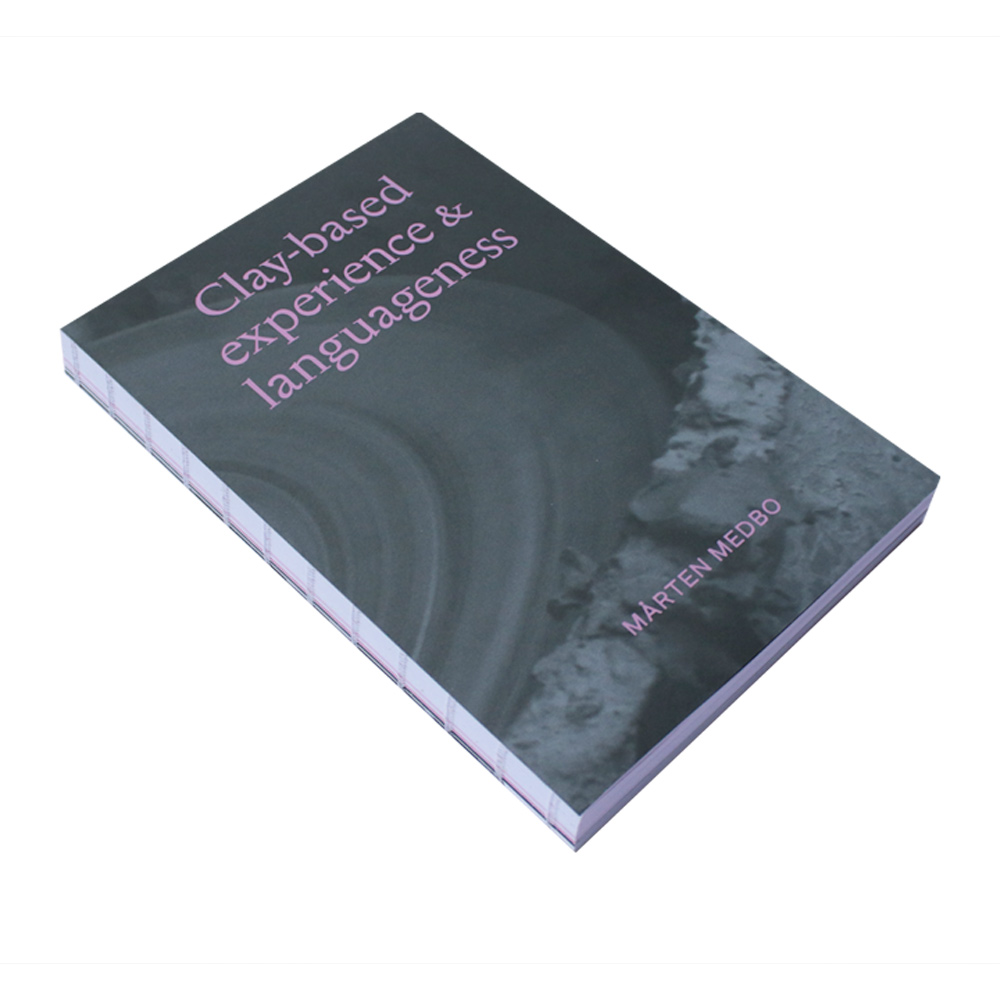
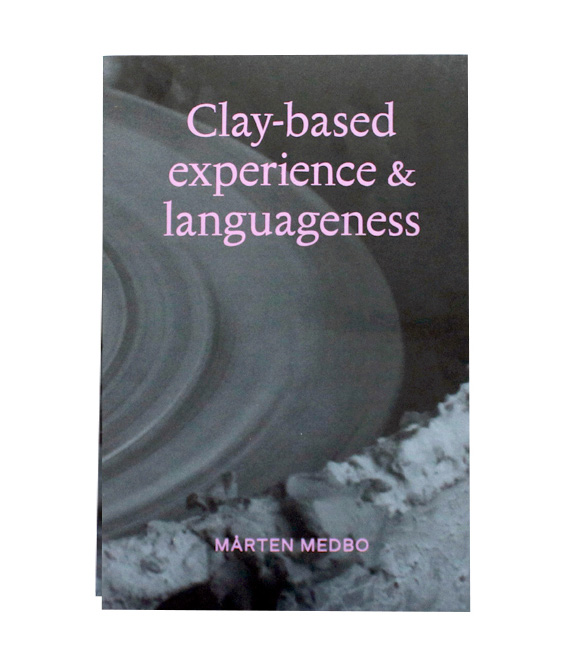
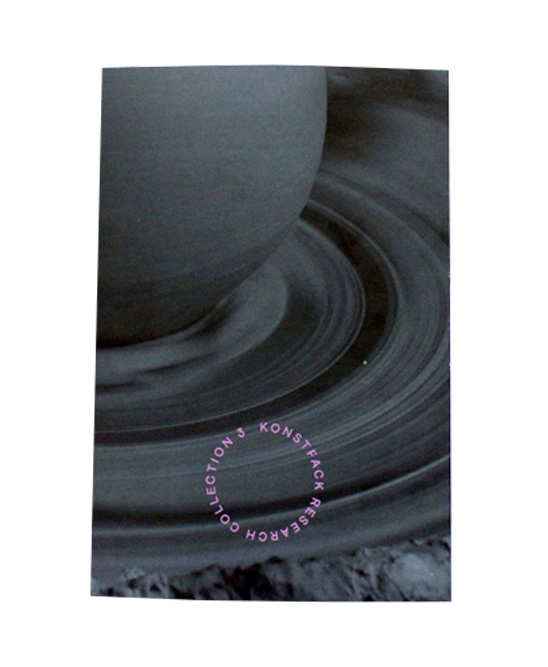
Mårten Medbo: Clay-Based Experience & Languageness
€26
Keyword: craft, clay, artistic practice, language, Swedish ceramic artist
Serie: Konstfack Research Collection, 3Size: 150 x 225 mm
Pages: 255
Format: softcover
Edition: 500 copies
Language: English
Illustration: 115 colour (65 on Medbo's work)
Photography: Andy Liffner
Book design: Knut Stahle
Printing: Danagård Litho
Publisher: Konstfack
Pub Year: 2022
Weight: 532 gr
ISBN: 9789185549535
Description
Article no.: 9789185549535
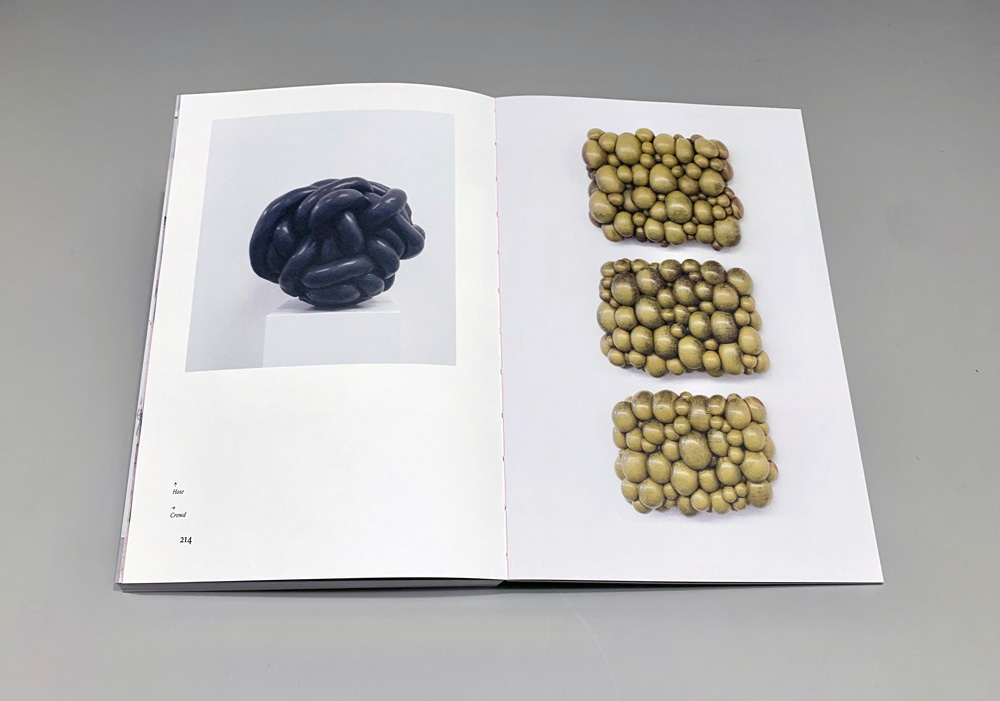
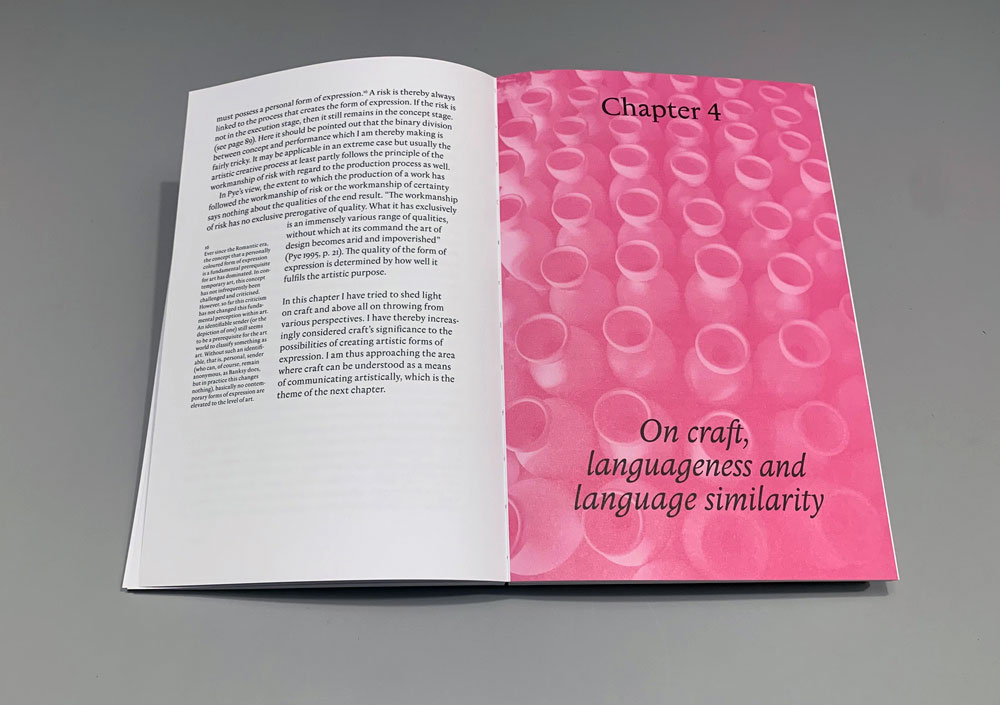
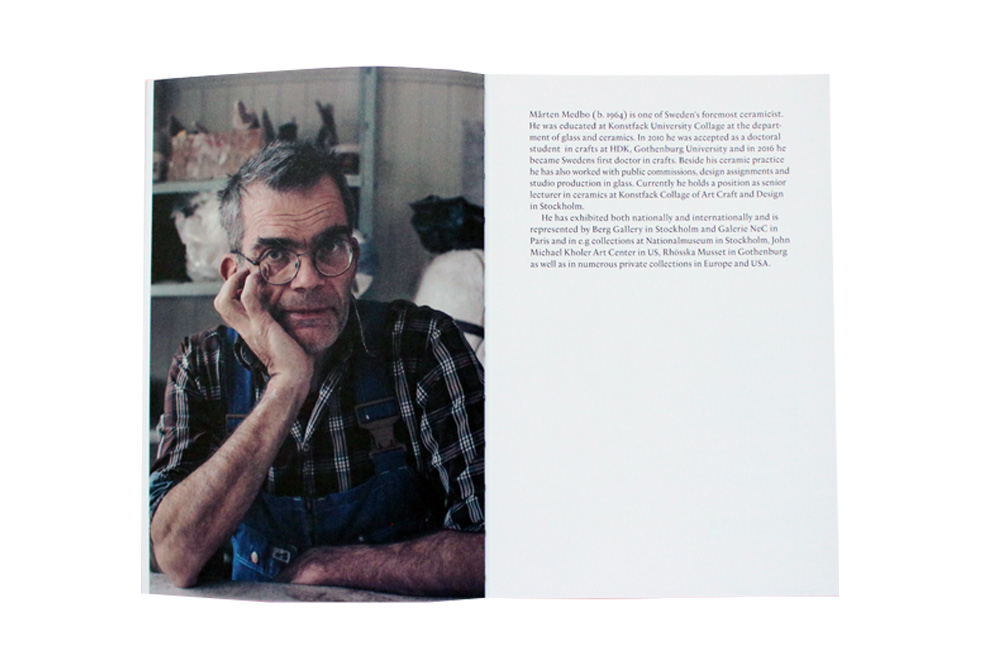
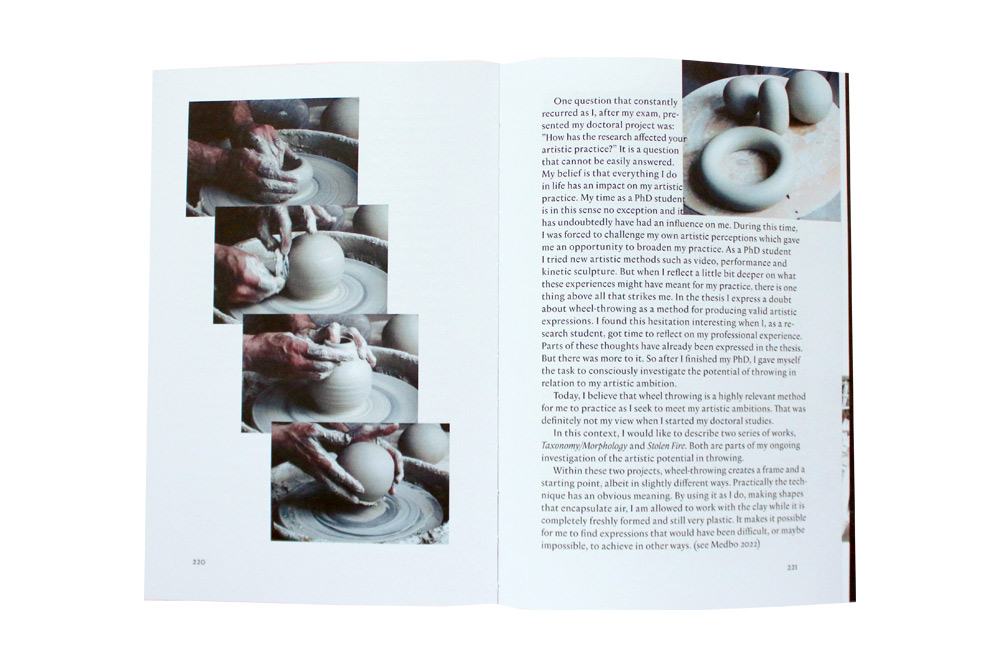
This is as English translation of Sweden's first dissertation on the topic of crafts by ceramic artist Mårten Medbo. The book is an investigation of crafts as a language practice, and presents a text-based and clay-based dissertations side by side. This English edition includes a new chapter About the book: Artists express something through their art. They do this in various ways. Some use clay, others wood, some their own voices and bodies, and yet others use words and concepts.This list could be longer. There are innumerable examples of artistic materialities. All of them have their own distinctive nature. All of them can be regarded as being different forms of language. This is a viewpoint that stems from the author's experience of expressing himself through clay as a ceramist. Yet, a doubt about the validity of this way to understand art has emerged. The 1990s were the start of an era of major changes in the view of how relevant craft should be defined. The change can be described as a theoretical turning point. A question mark can now be placed on clay’s artistic relevance within the new paradigm that has emerged. There is a view that some materialities are less capable of bearing any relevant message than others. Clay-based languageness, which is the focus of this dissertation, can be included among the less capable. Ideas about “empty form” have gained ground. These ideas are still very relevant today and are critically reflected through out the thesis. However, before the theoretical investigation into art’s languageness can begin, it is necessary to shed light on crafts and their role in the artistic creative process. Art’s languageness has its origin in craft. It is with the help of their handcrafting skills that artists can make art materialise and take on concrete form in this world. This relationship holds true for all the linguistic materialities of art, even those which are usually defined as immaterial. Thus the overall question of the thesis can be summarized as follows: How are clay-based experience and languageness to be understood and placed within a contemporary context. Mårten Medbo (born 1964) is one of Sweden's foremost ceramicist. He was educated at Konstfack University Collage at the department of glass and ceramics. In 2010 he was accepted as a doctoral student in crafts at HDK, Gothenburg University and in 2016 he became Swedens first doctor in crafts. Besides his ceramic work he has also worked with public commissions, design assignments and studio production in glass.