







Isabelle Sjövall: Designfulness
€34
Keyword: architecture, design, built environments, human brain, Swedish neurodesigner
Subtitle: How Brains Research is Revolutionising the Way We Live and Work
Size: 170 x 210 mm
Pages: 195
Format: hardcover
Language: English
Editor: Bengt Åkesson
Translator: Chris Hall
Illustrations: Lisa Hoffmann
Book design: Karin Rosenberg
Publisher: Bokförlaget Langenskiöld
Pub Year: 2021
Weight: 465 gr
ISBN 13: 9789198625059
Description
Article no.: 9789198625059
What can brain research teach us about design and architecture? How do we design homes, offices, schools, healthcare clinics and cities in harmony with our basic biological behaviours, emotions, and needs?
The human brain has not changed significantly in tens of thousands of years, but the environment most of us live in today stands in stark contrast to the savannah where our brains once evolved. In her new book ”Designfulness”, Scandinavian author and neurodesigner Isabelle Sjovall summarises scientific research, and gives concrete tips on how we can create environments that strengthen community, enhance recovery, as well as increase focus and creativity.
From the publisher:
According to WHO, Mental health conditions are increasing worldwide. Over the past decade, there has been a 13% rise. Including an alarming 20% of the world’s children and adolescents have a mental health condition. These conditions can have a substantial effect on all areas of life, such as school or work performance, relationships with family and friends and ability to participate in the community.
Two of the most common mental health conditions, depression and anxiety, cost the global economy US 1 trillion each year. A new Lancet Commission report on mental health said that mental disorders are on the rise in every country in the world and will cost the global economy US 16 trillion by 2030. The economic cost is primarily due to early onset of mental illness and lost productivity, with an estimated 12 billion working days lost due to mental ill health every year.
- The environment affects our health to the highest degree. Today, many environments make us stressed, unconcentrated and sick, because they are not adapted to how our brain is designed.
- But well-thought-out interiors, architecture and design can activate the brain's internal pharmacy - and promote health, sustainability, and quality of life.
- Design is present in our lives 24/7. If we do not make sure to consciously influence the environments we are in, we will instead be exposed to them, says neurodesigner and author, Isabelle Sjovall.
Through exciting research studies, inspiring illustrations and interviews with experts such as Anjan Chatterjee – a medical doctor, brain researcher and professor of neurology and Sophie Scott – a professor and brain researcher, Isabelle explains how important it is that architecture and design based on how people function biologically - instead of mere taste.
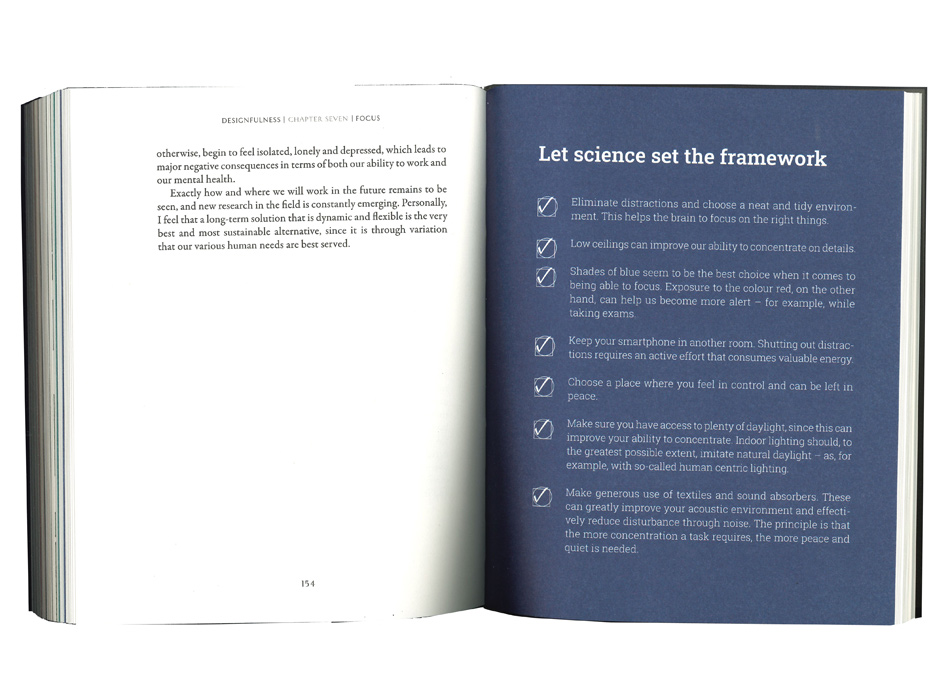
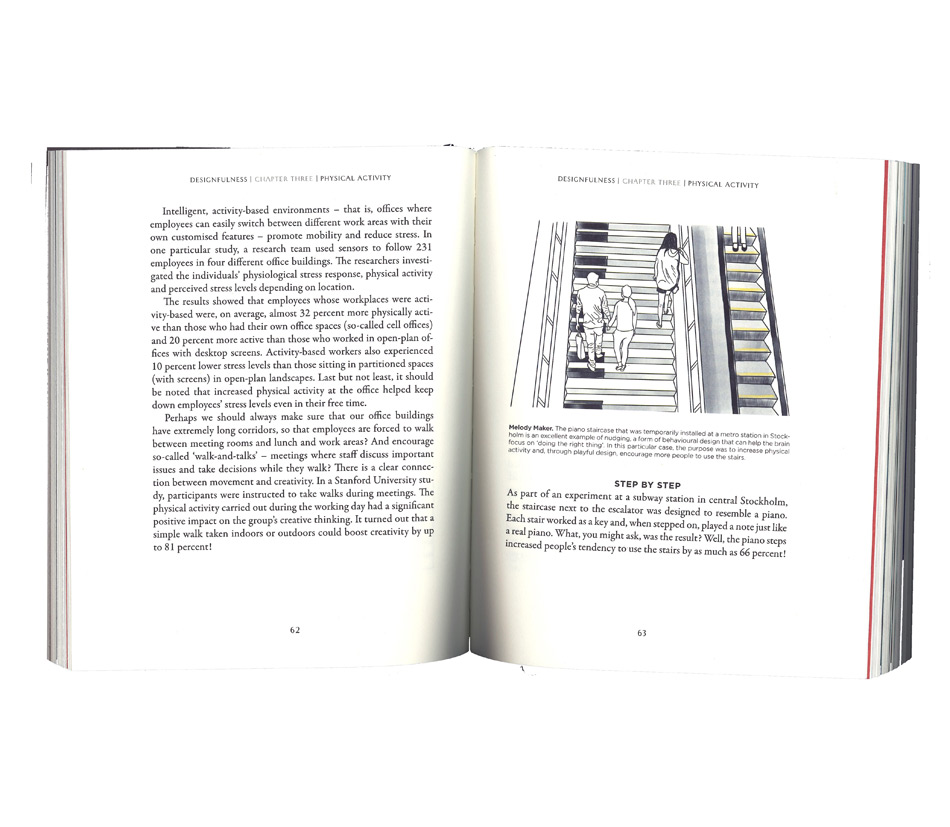
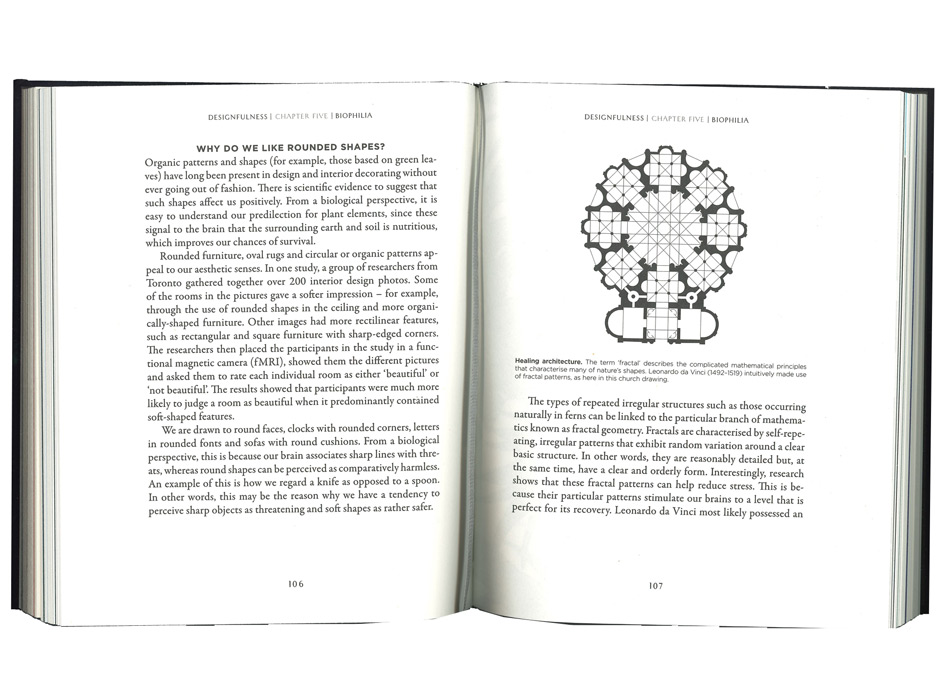
- Thanks to the rapid development of brain research in recent years, we have begun to gain greater insight into why we feel and react as we do. Influences such as colours, shapes, proportions, symmetry, light, sound, tactility, and different types of materials all affect our behaviour. Our preferences, feelings, experiences, and intuition have their origin in our brains and our evolution, Isabelle continues.
Exactly how we will live and work in the future, no one knows. But if we include the knowledge of the brain in architecture and design, the chances increase that more people will be able to live a healthy and sustainable life.
The human brain has not changed significantly in tens of thousands of years, but the environment most of us live in today stands in stark contrast to the savannah where our brains once evolved. In her new book ”Designfulness”, Scandinavian author and neurodesigner Isabelle Sjovall summarises scientific research, and gives concrete tips on how we can create environments that strengthen community, enhance recovery, as well as increase focus and creativity.
From the publisher:
According to WHO, Mental health conditions are increasing worldwide. Over the past decade, there has been a 13% rise. Including an alarming 20% of the world’s children and adolescents have a mental health condition. These conditions can have a substantial effect on all areas of life, such as school or work performance, relationships with family and friends and ability to participate in the community.
Two of the most common mental health conditions, depression and anxiety, cost the global economy US 1 trillion each year. A new Lancet Commission report on mental health said that mental disorders are on the rise in every country in the world and will cost the global economy US 16 trillion by 2030. The economic cost is primarily due to early onset of mental illness and lost productivity, with an estimated 12 billion working days lost due to mental ill health every year.
- The environment affects our health to the highest degree. Today, many environments make us stressed, unconcentrated and sick, because they are not adapted to how our brain is designed.
- But well-thought-out interiors, architecture and design can activate the brain's internal pharmacy - and promote health, sustainability, and quality of life.
- Design is present in our lives 24/7. If we do not make sure to consciously influence the environments we are in, we will instead be exposed to them, says neurodesigner and author, Isabelle Sjovall.
Through exciting research studies, inspiring illustrations and interviews with experts such as Anjan Chatterjee – a medical doctor, brain researcher and professor of neurology and Sophie Scott – a professor and brain researcher, Isabelle explains how important it is that architecture and design based on how people function biologically - instead of mere taste.
- Thanks to the rapid development of brain research in recent years, we have begun to gain greater insight into why we feel and react as we do. Influences such as colours, shapes, proportions, symmetry, light, sound, tactility, and different types of materials all affect our behaviour. Our preferences, feelings, experiences, and intuition have their origin in our brains and our evolution, Isabelle continues.
Exactly how we will live and work in the future, no one knows. But if we include the knowledge of the brain in architecture and design, the chances increase that more people will be able to live a healthy and sustainable life.