







Gustav Karlsson: Real-Fantasy
€19
Keyword: 2020s, architecture, urban planning, spatiality
Size: 110 x 180 mmPages: 120
Format: softcover
Edition: 150
Illustration: in colour & b/w
Language: English
Text: Gustav Karlsson
Book design: Fält (Jesper Canell & Daniel Flodin)
Publisher: Stromboli Kust, Stockholm
Pub Year: 2025
Weight: 135 gr
ISBN: 9789153146926
Description
Article no.: 9789153146926
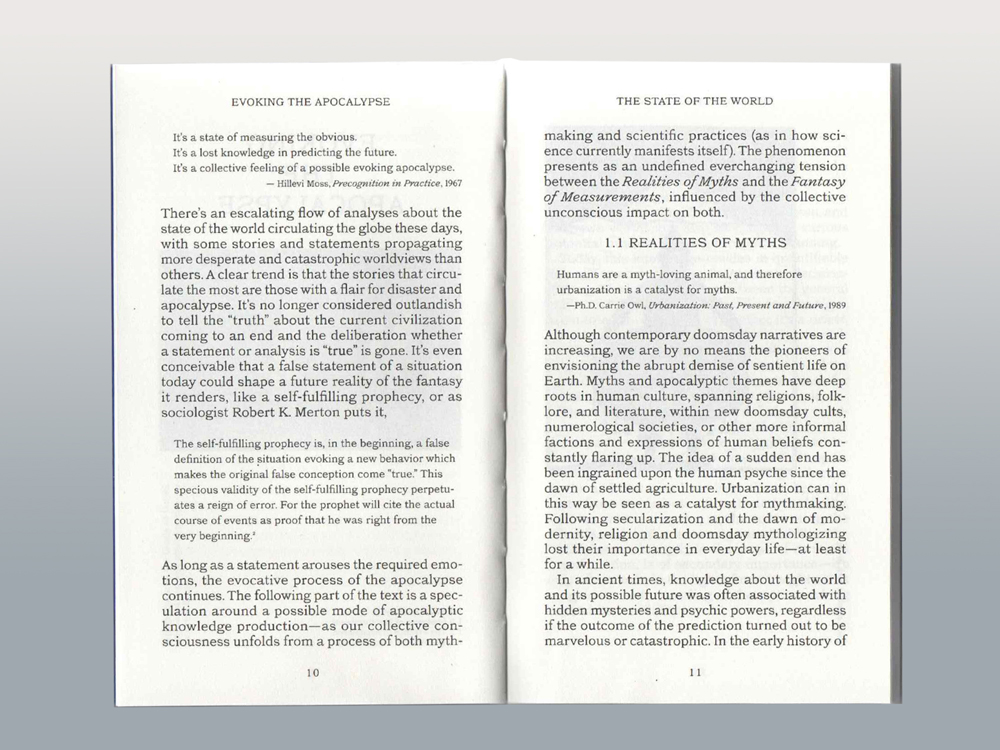
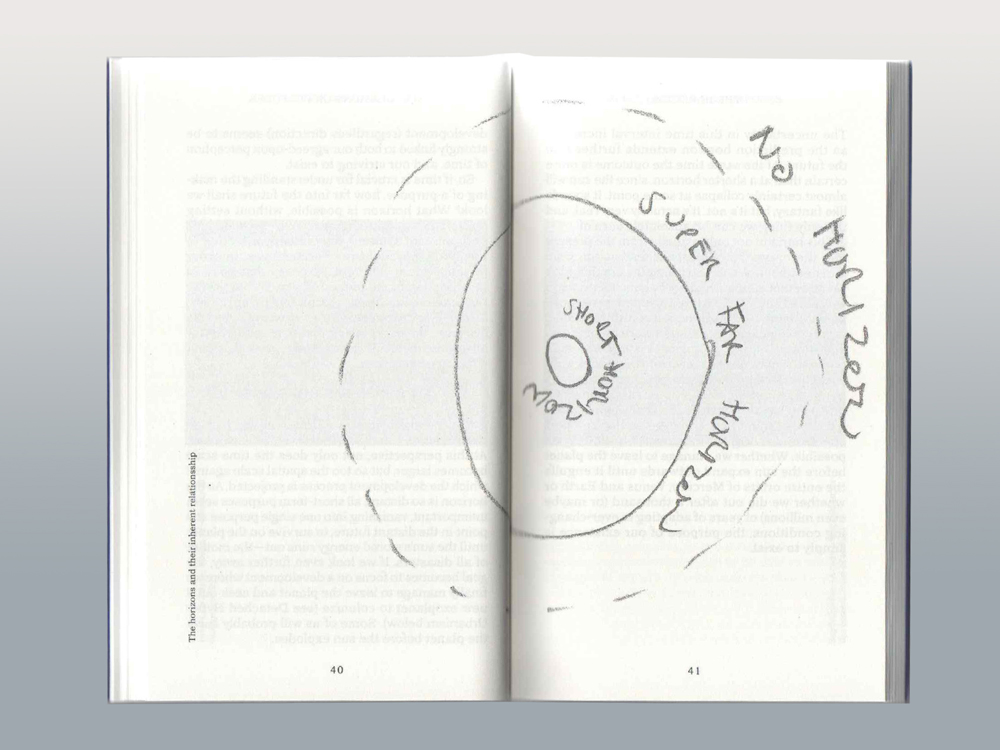
This stunning little book explores urban planning as a tension between utopian hopes and dystopian forecasts, questioning whether urpan planning's pursuit of growth worsens the crisis it aims to solve.
From the publisher:
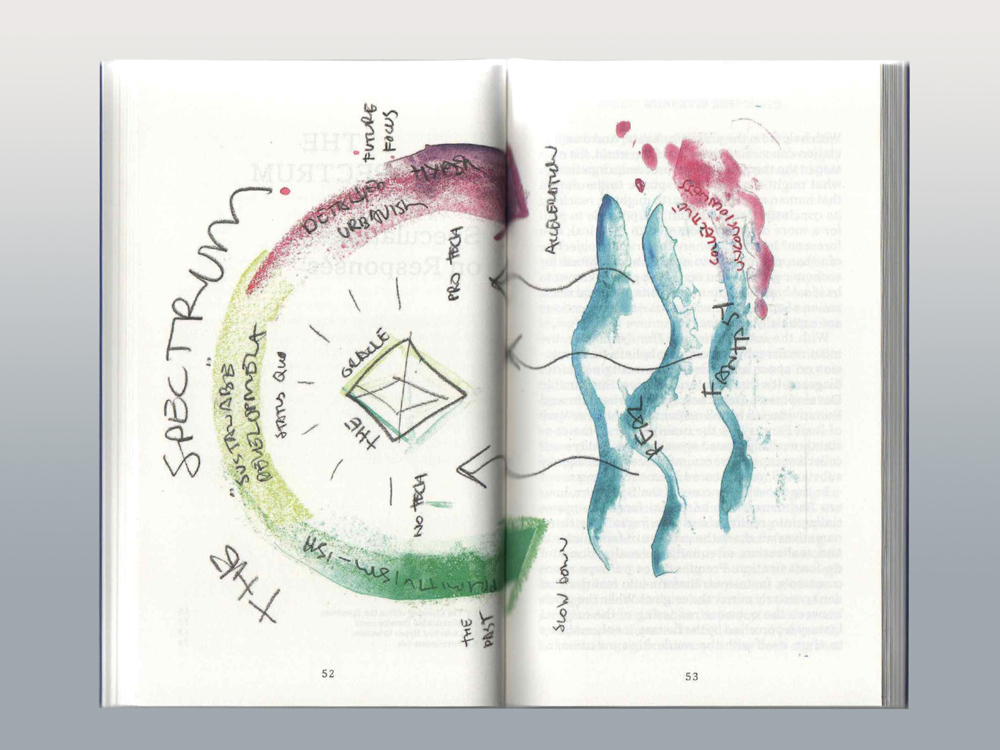
Urban planning-a balancing act towards a more or less realized fantasy. Depending on the emotional mix of the forecast that precedes the fantasy-weighted towards either more dystopian, or more optimistic feelings-the task may not always be to blindly aim for a bright future, but to resiliently focus away from the prediction, as a kind of anti-planning. In line with some of today's most common future predictions-accelerated climate change, rising inequality, social collapse, among other apocalyptic scenarios. The prevailing overarching aim in urban planning should arguably be aligned to this anti focus, however, this does not seem to be the case.
The following speculations in this book are all based on a premonition that the planning response needed to soft-land the predicted dystopian consequences may not be compatible with the prominent underlaying motives of urban planning-the fantasy of economic growth. This particular fantasy, and its subsequent attempts to be realized, may even be a strong contributing factor enabling the more dystopian predictions to become real-scenarios that we should try to plan away from, if we could (or wanted to). Whether one chooses to see the inherent limitations of planning, or not, one could agree that the situation is of a more psychological nature than an "urban planning challenge" waiting to be solved.
From the publisher:
Urban planning-a balancing act towards a more or less realized fantasy. Depending on the emotional mix of the forecast that precedes the fantasy-weighted towards either more dystopian, or more optimistic feelings-the task may not always be to blindly aim for a bright future, but to resiliently focus away from the prediction, as a kind of anti-planning. In line with some of today's most common future predictions-accelerated climate change, rising inequality, social collapse, among other apocalyptic scenarios. The prevailing overarching aim in urban planning should arguably be aligned to this anti focus, however, this does not seem to be the case.
The following speculations in this book are all based on a premonition that the planning response needed to soft-land the predicted dystopian consequences may not be compatible with the prominent underlaying motives of urban planning-the fantasy of economic growth. This particular fantasy, and its subsequent attempts to be realized, may even be a strong contributing factor enabling the more dystopian predictions to become real-scenarios that we should try to plan away from, if we could (or wanted to). Whether one chooses to see the inherent limitations of planning, or not, one could agree that the situation is of a more psychological nature than an "urban planning challenge" waiting to be solved.